Why the most extraordinary weddings are designed like works of art
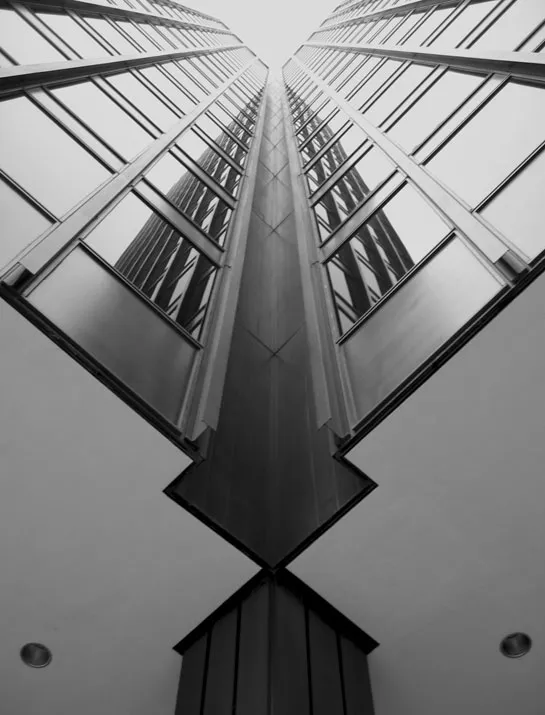
There is a moment inside certain buildings when architecture seems to disappear.
You no longer notice the stone, the proportions or the height of the ceiling. You simply feel something.
A change in light.
A sudden silence.
The instinct to look upwards.
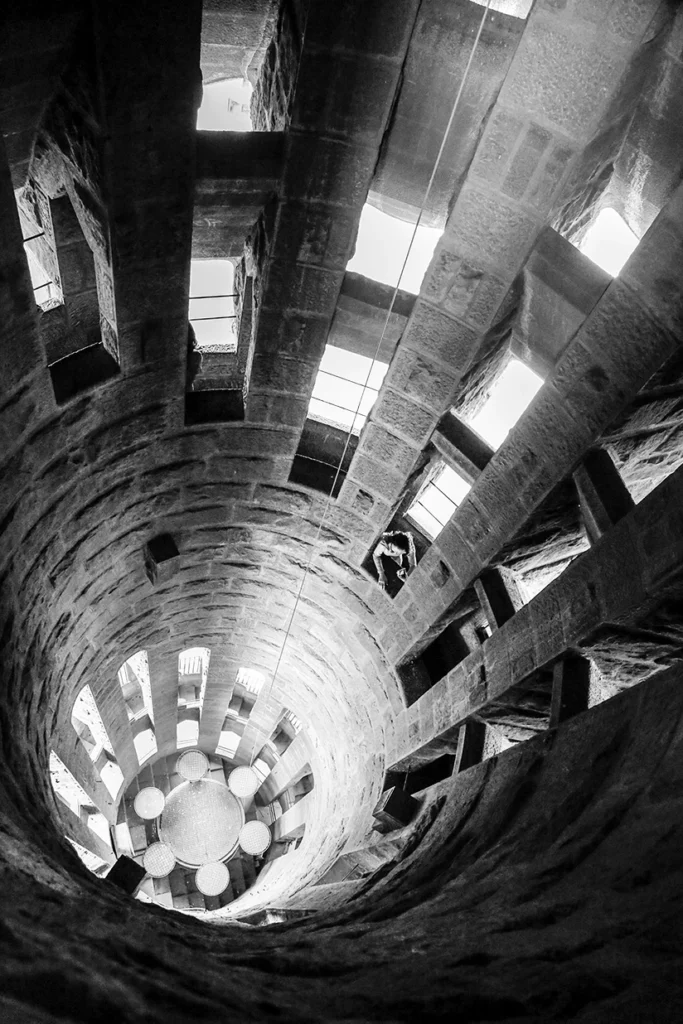
Great architecture has always understood something that exceptional celebrations must understand too: emotion can be designed.
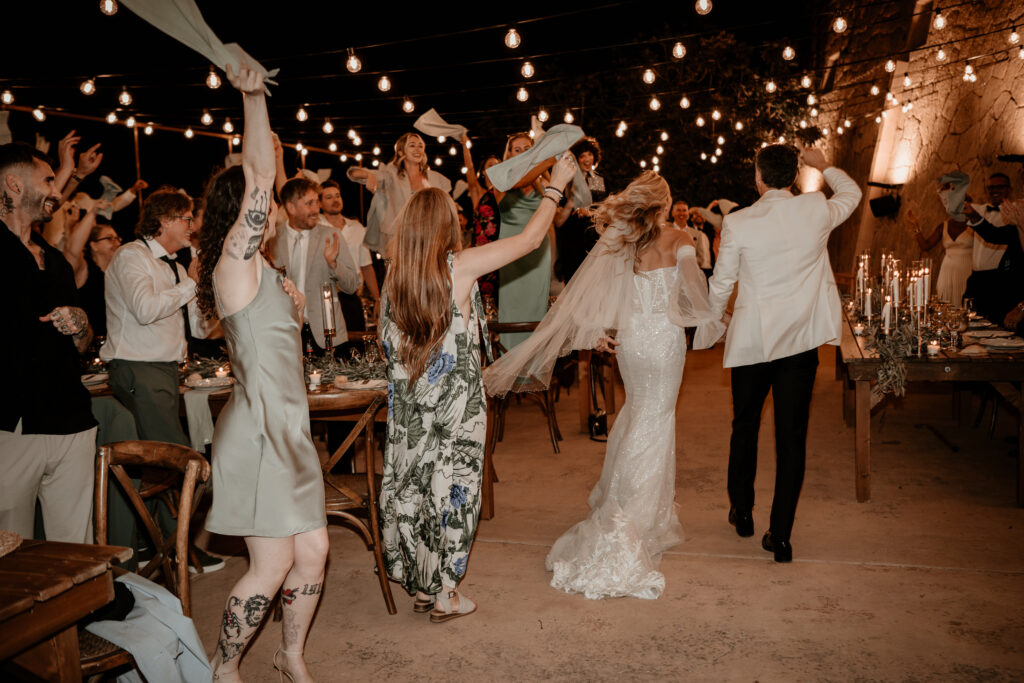
Perhaps this is why the most extraordinary weddings are not really decorated.
They are composed.
Architecture begins with emotion

Think of the buildings that remain in our memory.
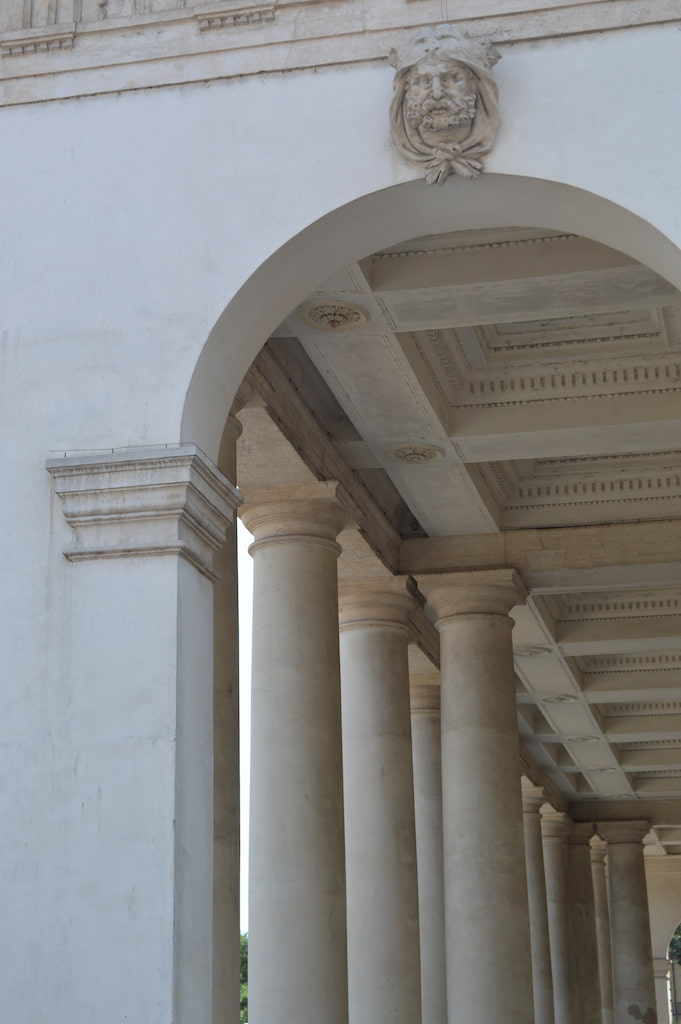
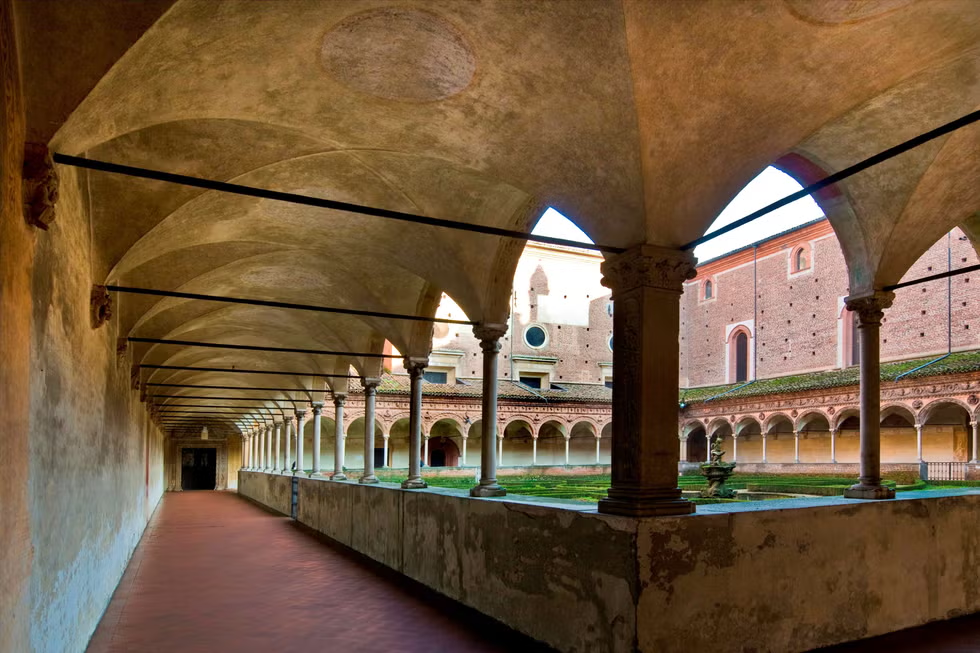
A Renaissance palazzo does not make us feel the same way as a Mediterranean modernist house. A Baroque church creates a completely different emotional rhythm from a Brutalist interior or an eighteenth-century garden.
Materials, scale, symmetry, shadow, perspective and movement quietly influence the way we experience a space.
Long before we consciously understand a building, our body has already responded to it.
The same principle can transform a wedding.

Instead of beginning with flowers, colours or tables, imagine beginning with a different question:
How should this moment feel?
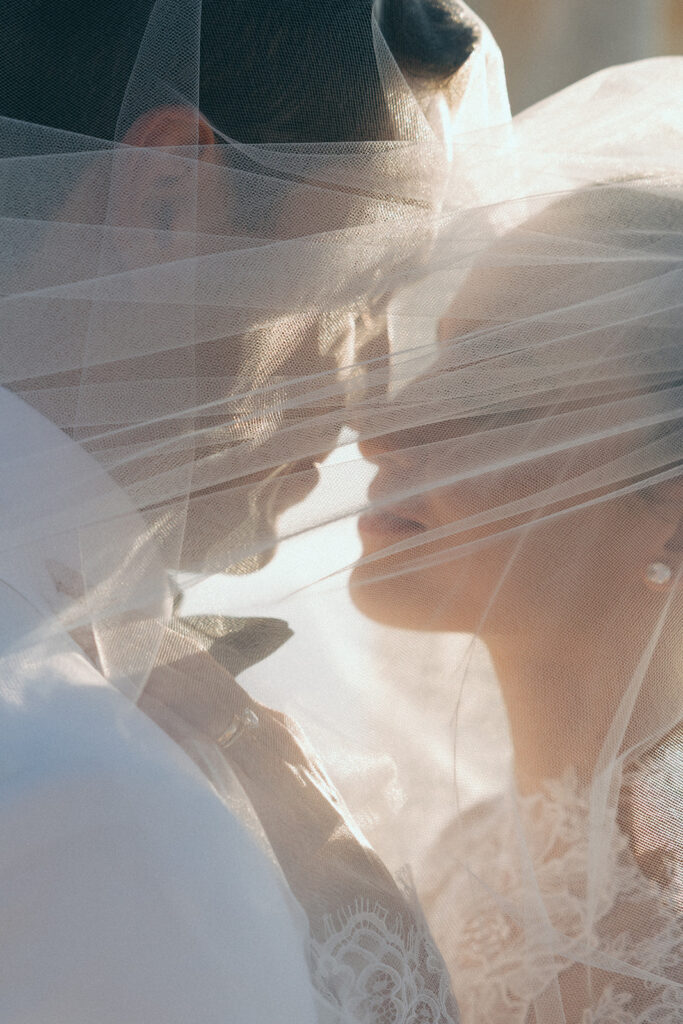
Intimate?
Monumental?
Unexpected?
Almost theatrical?
From that decision, everything else can begin to take form.
A wedding has its own architecture

Every extraordinary celebration contains a sequence.
The arrival.
The first glimpse of the setting.
The ceremony.
The transition towards dinner.
Candlelight appearing as daylight disappears.
Music heard from another room.
A door opening onto something the guests did not know was there.
These transitions are not simply logistics.
They are spatial storytelling.
Architects have used this principle for centuries: revealing and concealing, compressing and expanding, moving people through darkness towards light, framing a landscape before finally allowing it to appear.
A beautifully conceived wedding can do exactly the same.
The venue therefore becomes much more than a backdrop.
It becomes part of the narrative.
The new luxury is not more. It is meaning.

Luxury has often been associated with abundance.
But abundance alone rarely creates beauty.
The most sophisticated environments are usually defined by something far more difficult to achieve: restraint, intention and extraordinary editing.
One remarkable floral intervention may be more powerful than filling an entire historic room with flowers.
A centuries-old wall illuminated precisely at dusk may need almost nothing else.
A dinner positioned according to the axis of a garden can feel more spectacular than an elaborate temporary construction.
This is where architecture changes the way we think about wedding design.
The question stops being:
What can we add to this space?
And becomes:
What is already extraordinary here — and how can we make people feel it?
Designing something that exists only once
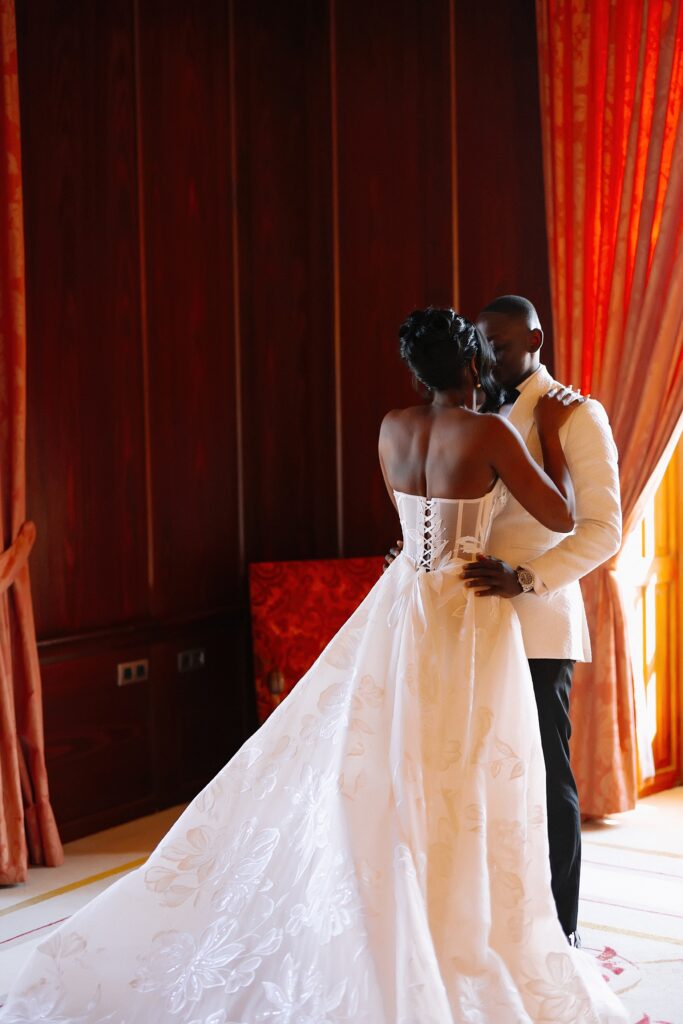
There is, however, one fascinating difference between architecture and a wedding.
Architecture aspires to permanence.
A celebration does not.
For a few hours, architecture, flowers, light, music, gastronomy, fashion and people exist together in one precise composition.
Then it disappears.
Perhaps that impermanence is part of its beauty.
Because the ultimate luxury may not be possessing something extraordinary.
It may be experiencing something extraordinary that will never exist in exactly the same way again.
At Cygnus Events, this is how we approach destination weddings: not as events to be decorated, but as experiences to be conceived through place, culture, architecture and the people who will inhabit them.
For clients searching for something that cannot simply be replicated elsewhere, Europe offers an extraordinary architectural vocabulary — historic estates, private palaces, Mediterranean landscapes and spaces whose beauty already carries centuries of memory.
Our role is to understand that language, protect it and create something entirely personal within it.
Not simply a beautiful wedding.
A world, designed for one night.