
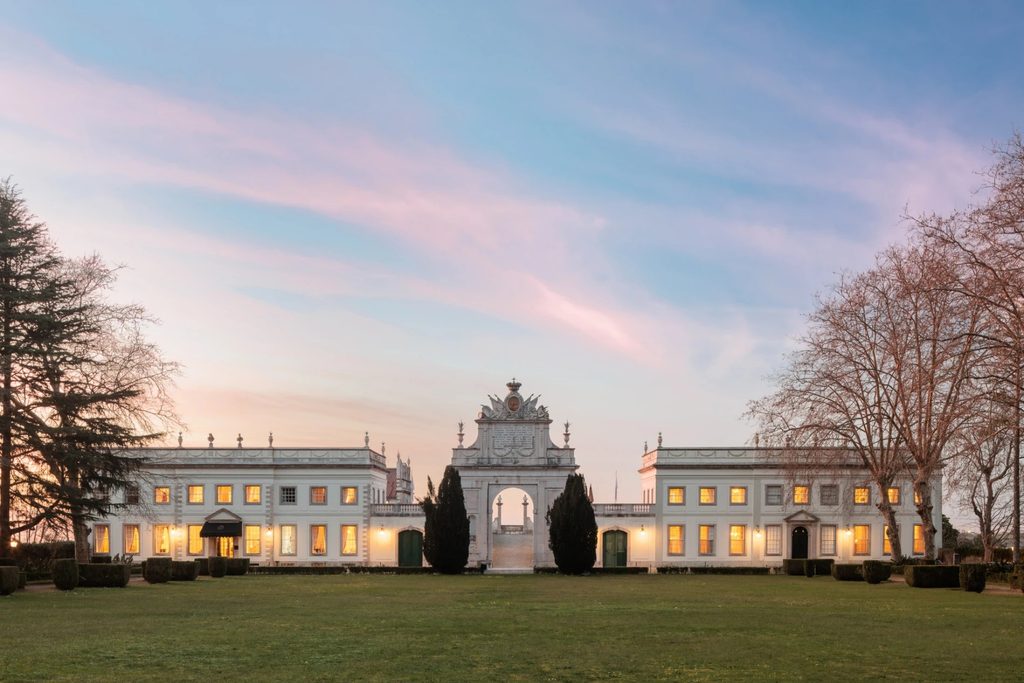
Some places hold your attention before a single flower arrives. A courtyard open to the evening sky. A staircase worn gently at its centre. A dining room whose proportions make a gathering feel instinctively intimate. For a wedding of exceptional character, architecture is where the design begins.
There is a particular pleasure in arriving somewhere that needs very little explanation.
You notice the weight of the door, the coolness of the stone, the way a passage opens unexpectedly onto a garden. Before anyone welcomes you, the building has established a mood.
When we consider a setting for a destination wedding, we pay attention to that first encounter. It tells us something that a capacity chart or a beautifully photographed terrace cannot: how it might feel to spend an evening there.
For clients accustomed to extraordinary surroundings, this feeling can become the deciding factor. Beauty is expected. A sense of belonging is more elusive.
A place with architectural presence gives a celebration its own language. The work is to understand it.
A setting with a point of view
A historic house carries choices made long before the wedding was imagined: the orientation of its rooms, the relationship between indoors and outdoors, the balance of public spaces and private retreats.
These qualities shape what can happen there.
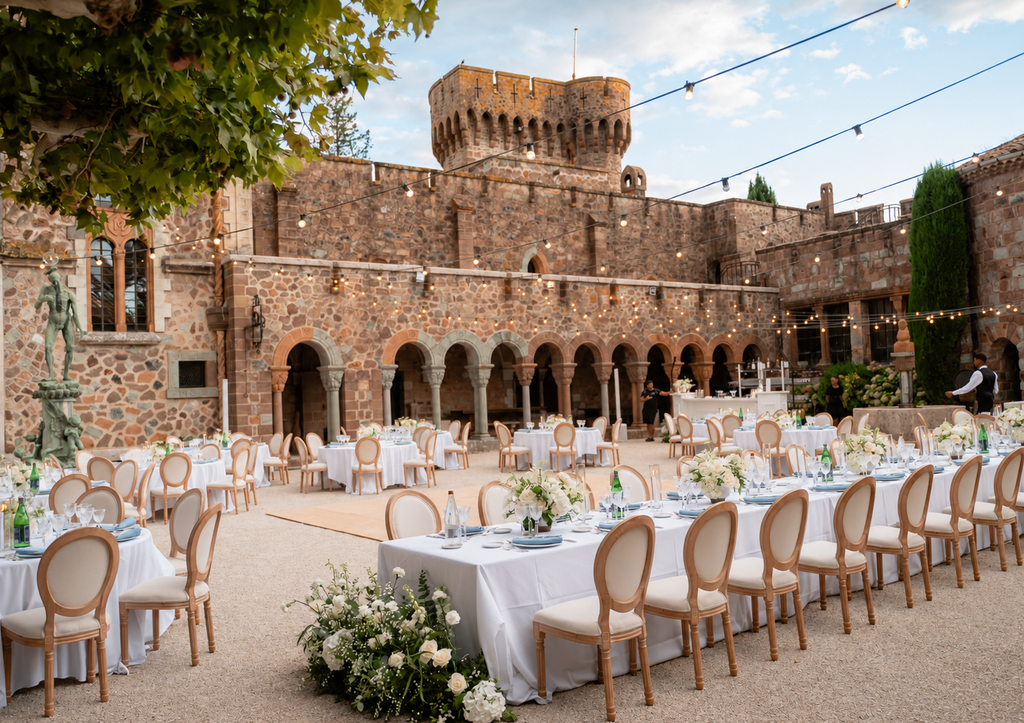
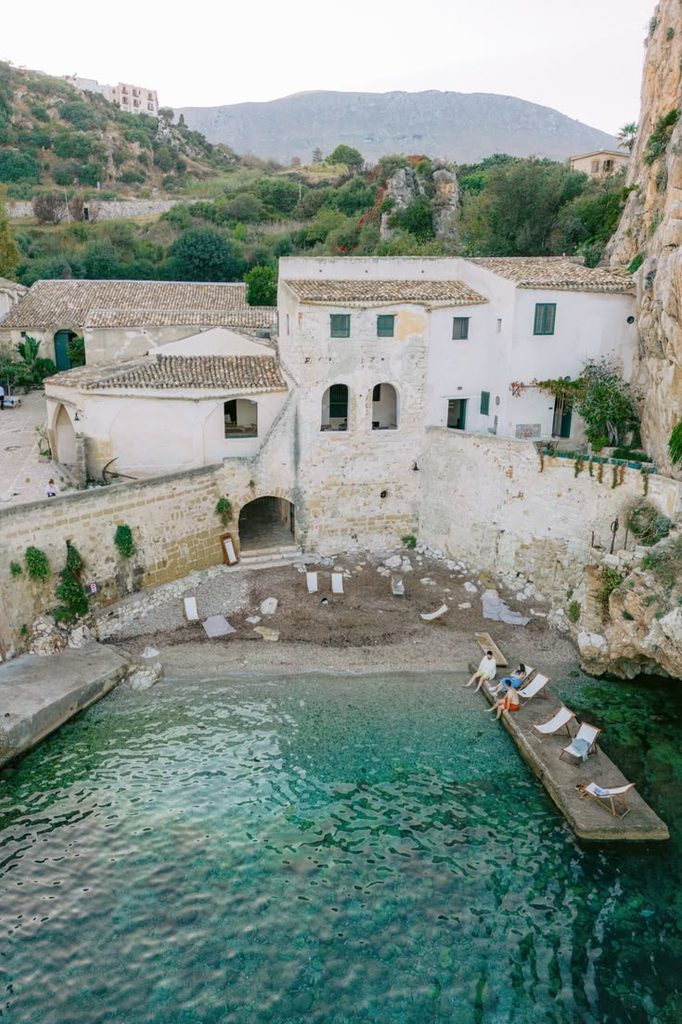
A sheltered courtyard might invite a long, conversational dinner. A sequence of salons might allow an evening to unfold through successive discoveries. A terrace facing the sea might deserve a moment of its own, with enough time for guests to appreciate the view.
Such spaces offer more than a visual backdrop. They suggest a way of gathering.
This is why we begin with the character of a property before developing its decorative direction. We look for the possibilities already present: where people will naturally pause, which room feels most welcoming after dark, and how the scale of a space will relate to the number of guests.
The strongest concept often emerges from those observations.
Heritage without performance
There is a distinction between celebrating in a historic setting and turning history into a theme.
An old estate does not require a theatrical interpretation of its past. Its character may be most clearly expressed through a quieter response: linen that sits comfortably against aged stone, contemporary glassware beneath a painted ceiling, flowers arranged to preserve the rhythm of an arcade.
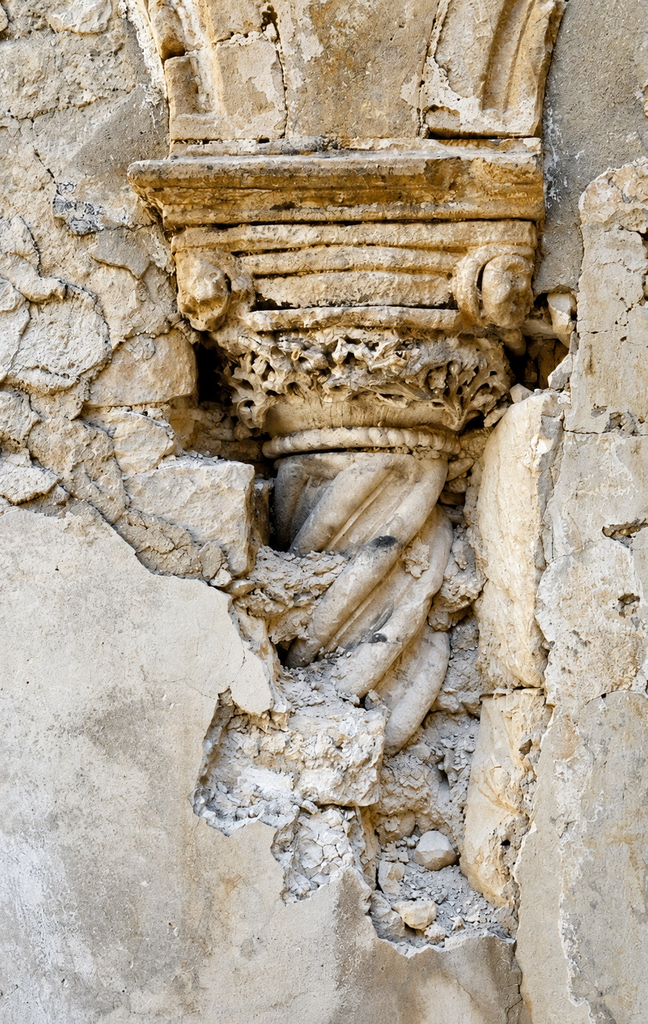
A contemporary element can feel entirely at home within historic architecture when its proportions, material and placement have been considered.
The question is whether each decision belongs.
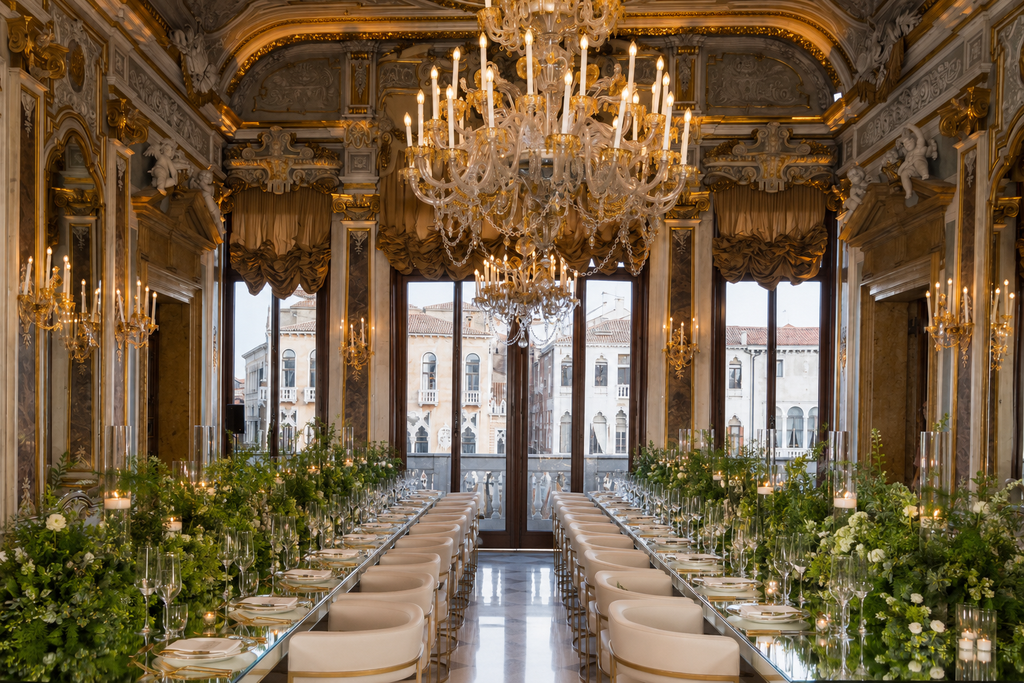
Does the table arrangement allow the room to breathe? Does the lighting reveal its depth? Can guests still appreciate the doorway, the fireplace, the garden beyond?
Restraint requires confidence. It means recognising when a space already offers something more compelling than an additional layer of decoration.
Privacy begins with the plan
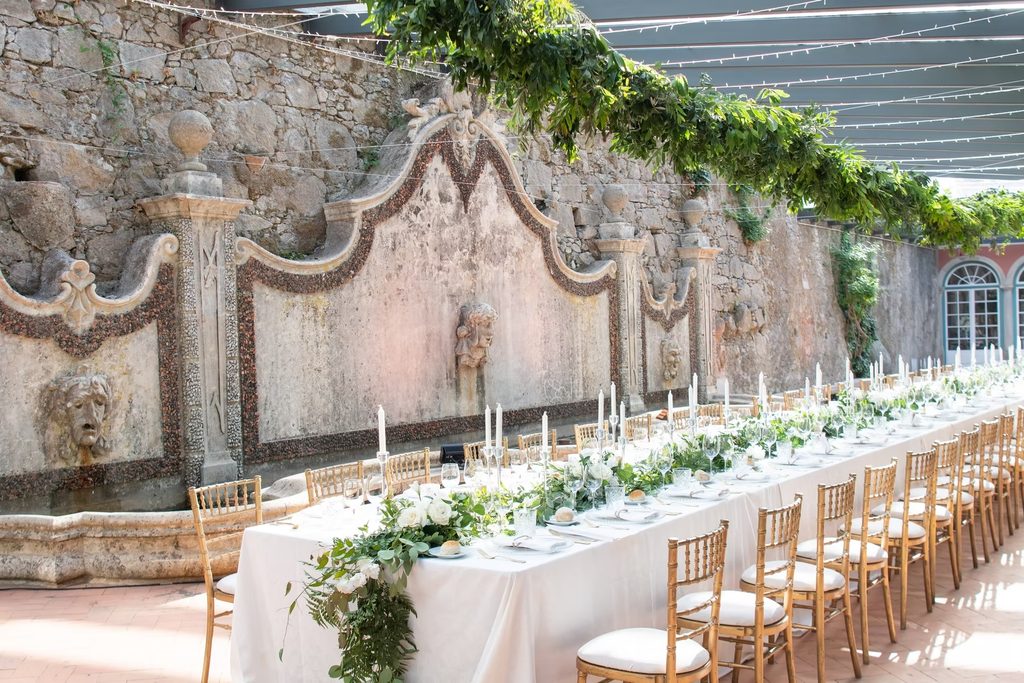
For a private celebration, exclusivity must translate into the experience of the day.
An exclusive-use property may still require careful consideration of sightlines, neighbouring access, staff circulation and the distance between guest spaces and service areas. A beautiful entrance loses some of its effect if it also becomes a delivery route.
We examine these relationships early.
Where can the couple spend a quiet moment without leaving the celebration entirely? Can suppliers work efficiently behind the scenes? How will guests move between spaces without encountering the practical activity supporting the evening?
Architecture can help create discretion, but only when the planning respects how the building works. The result should feel easy: a welcome offered at the right moment, a room ready before anyone enters it, a private space available when it is needed.
The evening has an architectural rhythm
A wedding is experienced in movement.
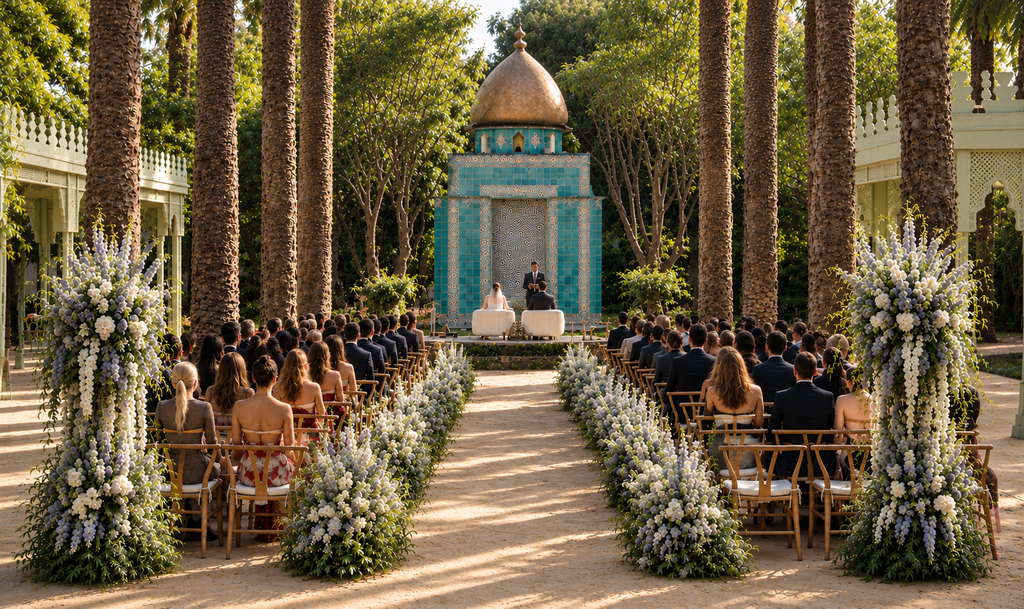
Guests arrive, gather, sit, wander and return. They encounter the same property in changing light and in different company. A place that feels expansive during the welcome may become wonderfully intimate once dinner begins.
We think carefully about that progression.
The approach establishes anticipation. The ceremony asks for focus. The aperitif allows movement and conversation. Dinner brings everyone into a shared frame, while the party needs its own energy and freedom.
A property does not need a separate space for every chapter. Sometimes the most memorable transition happens within one room, transformed through light, music and the arrangement of people.
What matters is that the progression feels natural. Guests should sense where the evening is going without feeling directed through it.
Beauty must remain convincing after sunset
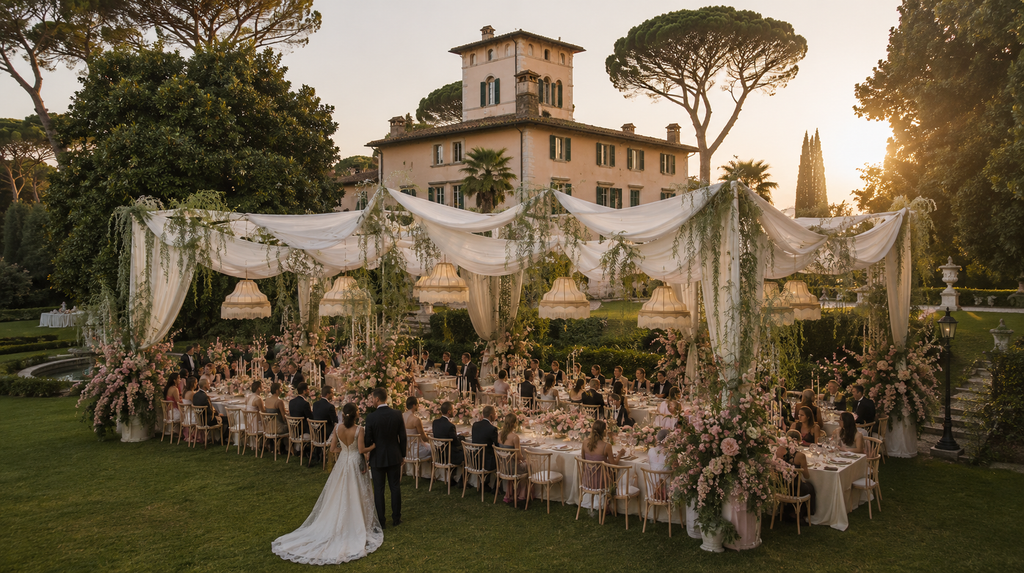
A venue visit in perfect afternoon light reveals only part of the experience.
We also want to understand the property at dinner time, in cooler weather, and under the conditions of a full celebration. The alternative arrangements deserve the same scrutiny as the preferred ones.
If dinner moves indoors, will the room still feel generous? Can the ceremony retain its intimacy in another setting? Will the lighting support both conversation and the architecture around it?
In heritage properties, practical requirements and permissions must be understood before the design takes shape. Access, power, sound and installation methods influence what can be achieved gracefully.
Resolving these details early protects the atmosphere everyone came for.
A celebration that belongs to its place
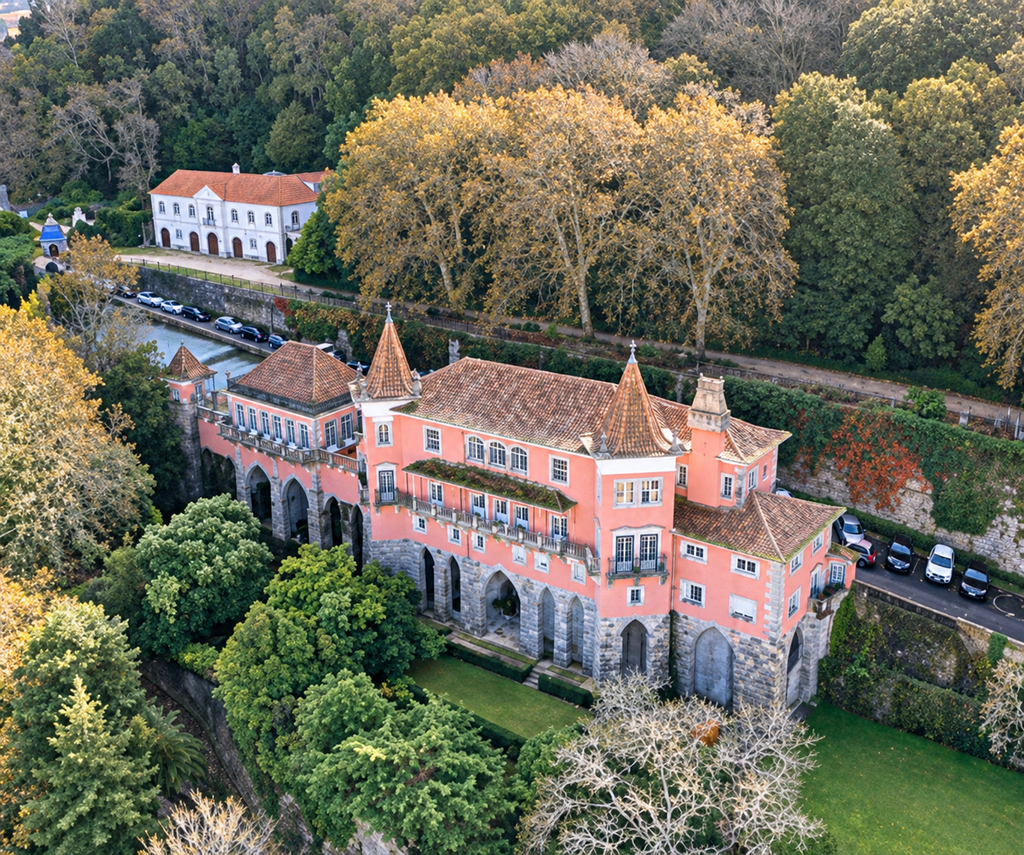
The most enduring wedding images often contain something unmistakable: a particular quality of stone, an unusual window, the outline of a courtyard at dusk.
Yet the deeper memory is rarely visual alone.
It is the feeling of stepping out of the heat into a cool room. The sound of conversation beneath a vaulted ceiling. The pause before entering a garden lit for dinner.
These are experiences a place can offer when it has been chosen thoughtfully and interpreted with care.
At Cygnus Events, we approach venue selection as the first act of design. We consider architecture alongside privacy, hospitality and the way a couple wishes to gather the people closest to them.
From there, we create a celebration with enough personality to feel deeply their own, and enough sensitivity to let the setting speak.
To explore an architecturally distinctive setting for your destination wedding, we invite you to begin a private conversation with Cygnus Events.